
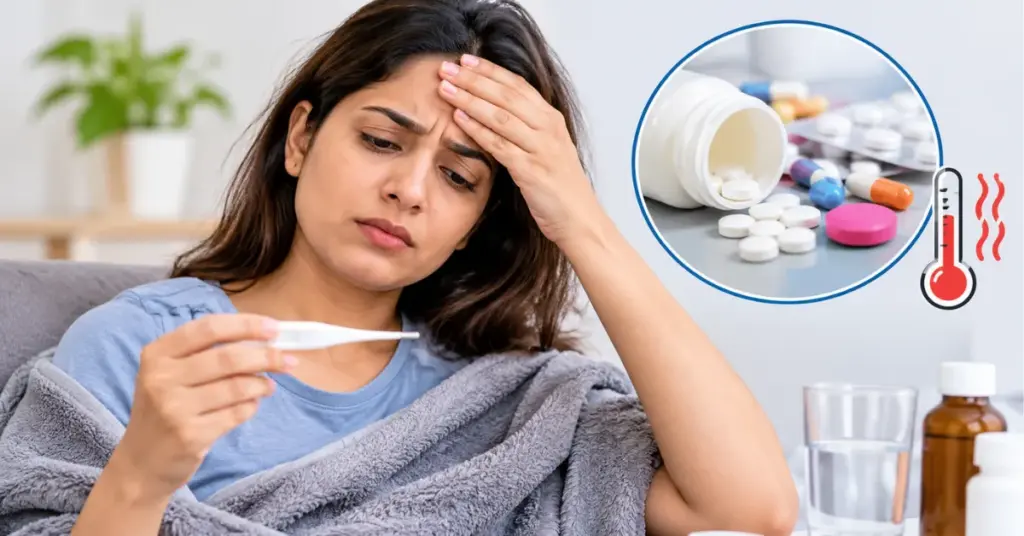
Fever is often linked to infection, but some medicines can also raise body temperature. This is called drug-induced fever. It is uncommon and should not be assumed to be the cause whenever someone develops a temperature. Infections and other medical conditions must also be considered.
What Is Drug-Induced Fever?
Drug-induced fever is a fever associated with a medicine. It may result from an immune response, inflammation, or an effect on temperature regulation. The reaction varies between individuals.
Which Medicines May Trigger It?
Certain antibiotics, anti-seizure medicines, some heart medicines, anti-inflammatory drugs, and cancer treatments have occasionally been associated with fever. The likelihood depends on the medicine and the individual.
This does not mean these medicines commonly cause fever or should be avoided. Tell your doctor about prescription medicines, non-prescription products, and supplements you take.
When Can Fever Develop?
Fever may appear within days of starting a medicine, although it can develop later. Chills, tiredness, headache, muscle aches, or a rash may also occur. Some people have fever without other obvious symptoms.
Timing can offer a clue, but cannot prove that a medicine is responsible. Fever during treatment may instead be caused by the original infection, a new infection, or another condition.
How Is It Diagnosed And Managed?
A doctor reviews the medication history, symptom timeline, and examination findings. Blood tests, cultures, or other investigations may be needed to check for infection and alternative causes. Drug-induced fever is considered after other likely explanations have been assessed.
If a reaction is suspected, the doctor decides whether treatment should be adjusted or an alternative prescribed. Do not stop or change prescribed medicines yourself. Seek medical advice for persistent or unexplained fever. Breathing difficulty, facial or throat swelling, a severe or blistering rash, fainting, or confusion requires urgent medical attention.
If you develop a fever while taking medication, seek a proper assessment rather than assuming its cause. A qualified doctor can guide appropriate care, including fever treatment in indore, while considering your medical history and current medicines.
FAQs
1. Can antibiotics cause fever?
Some antibiotics can rarely cause drug-induced fever. However, fever during treatment may also mean an infection is continuing or another infection has developed. Contact your doctor.
2. How soon can a medicine-related fever begin?
It may start within days, but timing varies with the medicine and individual response. It can sometimes appear after longer use.
3. Can drug-induced fever occur without a rash?
Yes. A rash may accompany some reactions, but fever can occur without one. Its absence does not confirm or rule out a drug reaction.
4. Should I stop my medicine if I develop a fever?
Do not stop, skip, or change prescribed doses without medical advice. Stopping some medicines suddenly can be harmful. Contact the prescribing doctor.
5. When should I seek emergency care?
Get urgent help for fever with breathing difficulty, facial or throat swelling, a severe or blistering rash, fainting, confusion, or rapid worsening.