
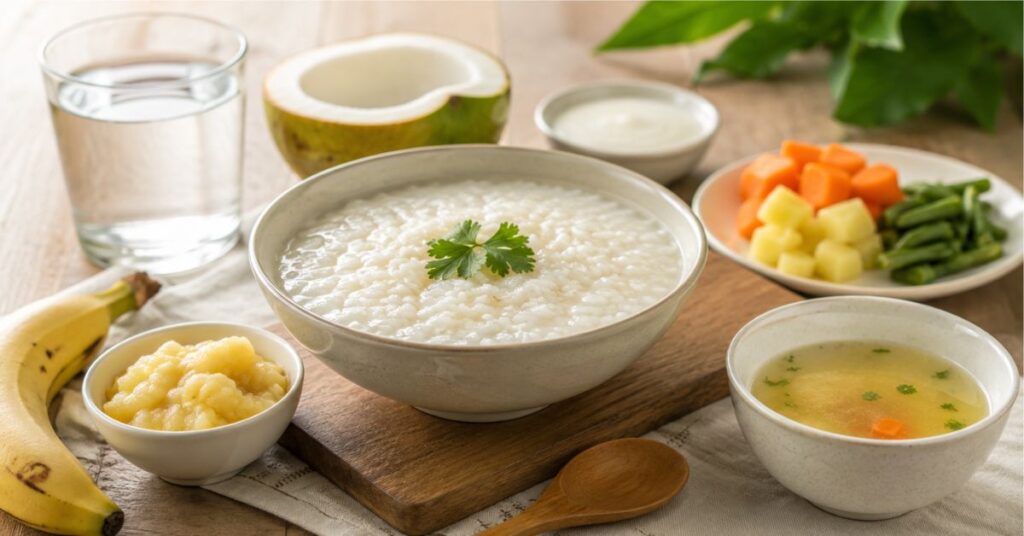
Recovering from typhoid can take time, even after the fever and other symptoms begin to improve. During this period, the digestive system may remain sensitive, and appetite may be reduced. A balanced, gentle diet can support energy levels, hydration, and gradual recovery. Foods should be easy to digest and introduced according to your appetite and tolerance.
Recommended Foods During Typhoid Recovery
Choose Easily Digestible Foods
Soft, well-cooked foods are often easier to tolerate during recovery. Rice, khichdi, porridge, soft chapati, boiled potatoes, and light soups can provide energy without making meals too heavy. Eating smaller meals several times a day may also be more comfortable than having large meals.
Include Fruits And Cooked Vegetables
Fruits such as bananas, apples, and other well-tolerated fruits can provide vitamins and carbohydrates. If raw fruits cause digestive discomfort, cooked or mashed options may be easier to tolerate. Cooked vegetables are generally gentler than heavily spiced or raw preparations and can add important nutrients to the diet.
Add Protein Gradually
Protein is important for maintaining strength during recovery. Depending on tolerance, options may include eggs, yogurt or curd, soft paneer, dal, and other easily digestible protein sources. If a particular food causes bloating, nausea, or loose stools, it is better to avoid it temporarily and try again later.
Foods And Drinks To Limit
During a typhoid recovery diet, avoid foods that may worsen digestive discomfort. Very spicy, fried, greasy, or heavily seasoned foods can be difficult to tolerate. Large or heavy meals may also cause discomfort when appetite and digestion have not fully returned. Excessively sugary drinks should be limited, and alcohol should be avoided during recovery, particularly if you are taking medicines or your doctor has advised against it.
Stay Well Hydrated
Hydration is an important part of recovery, especially if there has been fever, sweating, vomiting, or diarrhea. Drink water regularly throughout the day. Light soups and other suitable fluids can also contribute to fluid intake. Oral rehydration solutions may be useful when there has been significant fluid loss, particularly with diarrhea or vomiting. If you are unable to keep fluids down or have signs of dehydration, seek medical advice promptly.
Return To A Normal Diet Gradually
As appetite and digestion improve, gradually increase the variety and portion size of your meals. There is usually no need to suddenly return to rich or heavy foods. Pay attention to how your body responds and continue choosing nutritious foods that you tolerate well. Adequate rest, follow-up care, and completing prescribed treatment are also important parts of recovery. If fever returns, weakness becomes severe, vomiting persists, or symptoms worsen, medical evaluation is important. For professional guidance on recovery and infection-related concerns, Dengue, Malaria & Typhoid Treatment in Indore can help patients understand when medical assessment and supportive care may be needed.
FAQs
1. What foods are best during typhoid recovery?
Soft, well-cooked and easily digestible foods such as khichdi, rice, porridge, soups, bananas, cooked vegetables, and tolerated protein sources can be suitable.
2. Can I eat fruits during typhoid recovery?
Yes. Fruits can provide useful nutrients and energy. Choose fruits that you tolerate well, and consider cooked or mashed options if raw fruits cause discomfort.
3. Should I avoid spicy foods after typhoid?
It is generally sensible to limit very spicy and heavily seasoned foods until digestion and appetite have returned to normal.
4. How much fluid should I drink during recovery?
Drink fluids regularly according to your thirst and needs. If you have diarrhea, vomiting, or significant fluid loss, ask a healthcare professional about appropriate rehydration.
5. When can I return to my normal diet?
You can generally expand your diet gradually as your appetite and digestion improve. Introduce heavier foods slowly rather than making a sudden change.