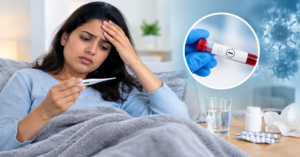
Tuberculosis (TB) can spread through the air when someone with infectious TB of the lungs or throat coughs, speaks, or sings. People sharing indoor spaces for extended periods may be exposed and should be assessed according to medical guidance.
Exposure does not automatically mean someone has developed TB disease. TB infection means bacteria are present in the body without symptoms of active disease, while active TB disease occurs when the bacteria cause illness.
Who Should Be Screened After A TB Diagnosis?
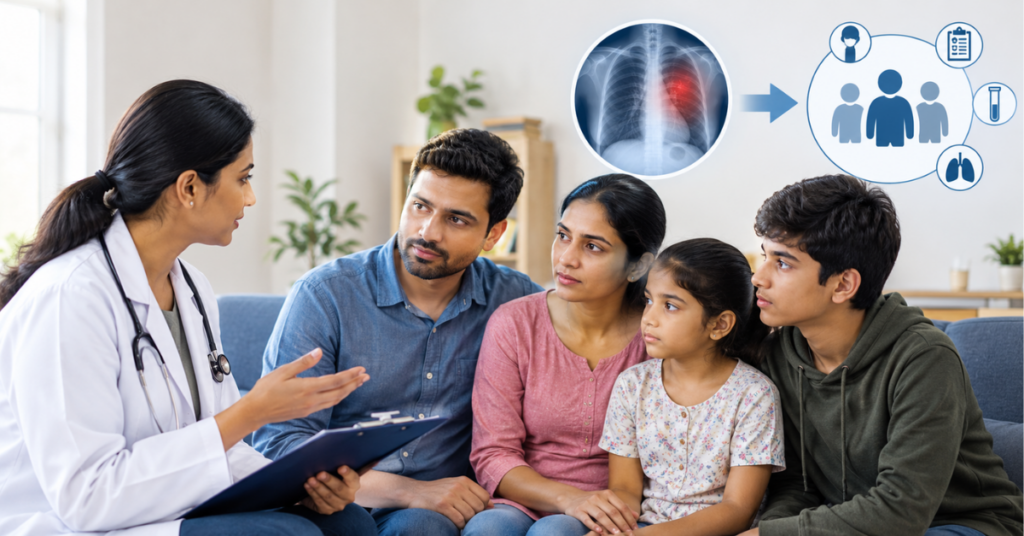
Household members and other close contacts who shared indoor space with the affected person may need screening. Children under five and people with weakened immune systems require particularly prompt assessment because they have a higher risk of developing serious TB disease.
The healthcare team considers the type of TB, infectiousness, duration of exposure, symptoms, and individual health risks when deciding what evaluation is needed.
How Are Household Contacts Evaluated?
The evaluation may include several steps:
- Symptom assessment: Checking for persistent cough, fever, night sweats, unexplained weight loss, chest pain, or coughing up blood. Children may have poor weight gain or reduced activity.
- Medical history and examination: Reviewing exposure, previous TB, underlying conditions, and current symptoms.
- Chest X-ray: Looking for lung changes that may suggest pulmonary TB.
- Diagnostic tests: Sputum testing, including rapid molecular tests when indicated, can help detect TB bacteria and assess drug resistance.
- TB infection tests: A tuberculin skin test or interferon-gamma release assay may help identify infection. These tests cannot independently confirm or exclude active TB disease.
Not everyone needs every test. The appropriate assessment depends on age, symptoms, exposure, and clinical findings.
What Happens If A Contact Tests Positive Or Has No Symptoms?
Contacts diagnosed with active TB need appropriate treatment. If active disease is excluded, eligible contacts may be offered TB preventive treatment following clinical assessment.
Preventive treatment helps reduce the risk of developing active disease, but it is not a substitute for treating active TB. Young children and immunocompromised contacts may need prompt evaluation even when they feel well.
What Should Families Do After Screening?
Attend recommended follow-up appointments and report any new symptoms promptly. Do not start TB medicines or preventive treatment without medical advice. If you need Tuberculosis Management in Indore, a qualified healthcare professional can guide contact evaluation, follow-up, and appropriate care.
FAQs
1. Should every household member be screened after a TB diagnosis?
Household and close contacts should be assessed according to medical guidance, with particular attention to young children and people with weakened immunity.
2. Can someone have TB without showing symptoms?
Yes. TB infection usually causes no symptoms, and some people with TB disease may initially have subtle symptoms. Evaluation after exposure is important.
3. Which tests may be needed for household contacts?
Assessment may include symptom screening, chest X-ray, sputum tests, and tests for TB infection, depending on clinical findings.
4. Do children need special evaluation after exposure to TB?
Yes. Children under five need prompt assessment because they are at greater risk of developing serious TB disease.
5. Can household contacts receive preventive treatment if they do not have active TB?
Yes. Eligible contacts may receive preventive treatment after a healthcare professional appropriately excludes active disease and assesses their suitability.