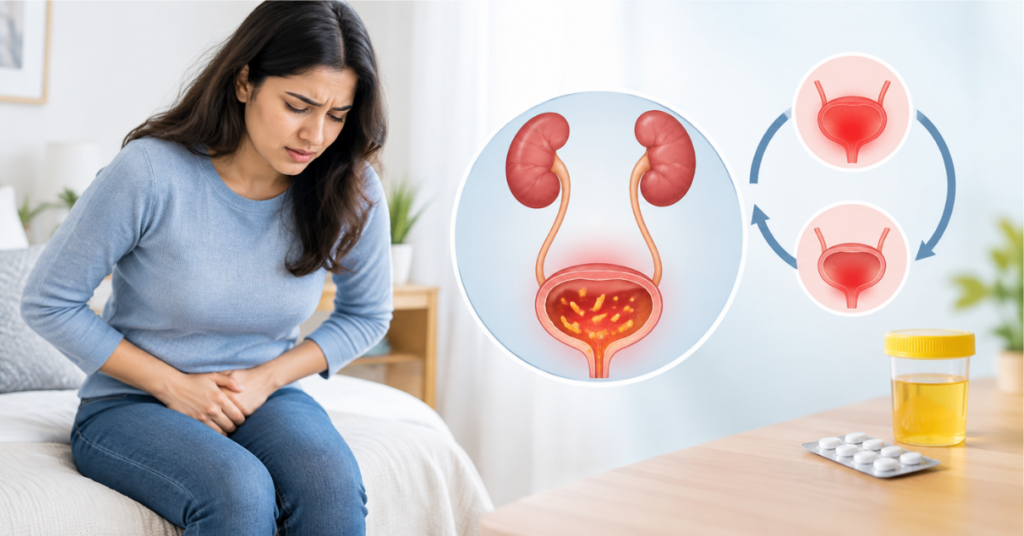
It can be frustrating when a urinary tract infection (UTI) comes back soon after treatment. Things like burning when you pee, frequent urination, lower belly pain, or cloudy urine can come back for different reasons. A recurring UTI doesn’t mean the initial treatment didn’t work. Sometimes it is a new infection, but sometimes it is an infection that has not been completely cleared. It is important to find the reason before starting another course of treatment.
Why Does A UTI Keep Recurring?
Incorrect Or Inadequate Treatment
Stopping treatment early may mean the infection is not fully cleared. If the bacteria are resistant to the antibiotic used, symptoms may recur. Using leftover antibiotics or taking antibiotics without consulting a doctor can make proper treatment more difficult.
Reinfection Or Chronic Infection
A reinfection is when a new UTI develops after the previous infection has cleared. A persistent infection means the original infection may still exist. Your doctor can help you determine the difference by considering when symptoms began, past test results, and treatment history.
When Do You Need A Urinalysis?
If symptoms continue, your doctor may order a urine test or urine culture. A culture can help identify the bacteria causing the infection and which antibiotics may be effective against it. Testing is especially helpful when symptoms don’t get better, come back soon after treatment, or happen often.
What Increases The Risk?
Some people tend to get urinary tract infections repeatedly. Risk can be increased by:
- Not drinking enough fluid
- Holding in urine for long periods
- Sexual activity
- Changes in estrogen levels and menopause
- Kidney stones or other problems that block urine flow
- Diabetes or other medical problems
- Urinary catheter use
Simple habits like drinking enough water, not holding urine too often, and maintaining good personal hygiene may help reduce the risk.
When To Visit A Doctor
Don’t keep taking the same antibiotic repeatedly for recurrent UTI symptoms without a doctor’s advice. Based on your symptoms, medical history, past treatment, and test results, your doctor may determine whether additional testing or a different treatment plan is necessary.
If you have fever, chills, vomiting, back or side pain, blood in your urine, or are just feeling very sick, get medical help right away. These could be signs of a more serious infection.
In individuals with recurrent symptoms, proper evaluation can help identify the cause and assist in guiding appropriate urinary tract infection (UTI) treatment in indore based on the individual situation and not just repeating previous medication.
FAQs
1. Do antibiotics cause a UTI to recur?
Yeah. It could be a new infection or the old one might not have been cleared fully. Medical evaluation may help identify the cause.
2. Do I have to repeat the same antibiotic?
Not without medical advice. The bacteria might be resistant or the symptoms could be caused by something else.
3. Will drinking more water help prevent UTIs?
Drinking enough fluids may help reduce the risk for some people, but it does not replace medical treatment for an active infection.
4. Are UTIs common in women who have them repeatedly?
Yes. Women are more susceptible to recurrent UTIs, partly because of urinary anatomic differences and other risk factors.
5. When is a urine culture helpful?
A urine culture may be useful if symptoms recur or do not improve, or if the choice of antibiotic is uncertain.