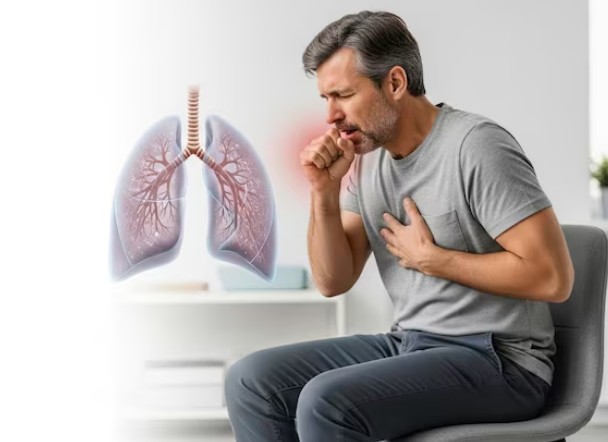
Pneumocystis pneumonia, commonly called PCP pneumonia, is a serious lung infection caused by Pneumocystis jirovecii. It mainly affects people with weakened immune systems, including some people living with HIV, patients receiving certain cancer treatments, transplant recipients, and people taking immunosuppressive medicines. If you are looking for PCP Pneumonia Treatment in Indore, an accurate diagnosis is an important first step because PCP can resemble other respiratory infections.
What Is PCP Pneumonia?
PCP pneumonia is an opportunistic fungal infection of the lungs. The organism responsible is Pneumocystis jirovecii. It may cause significant breathing problems, especially in people whose immune systems are weakened.
The symptoms can develop gradually. Common symptoms include:
- Dry or non-productive cough
- Fever
- Increasing shortness of breath
- Chest discomfort
- Tiredness and weakness
- Breathlessness during physical activity
- Low oxygen levels
In people with HIV, PCP may develop over several days or weeks. However, the presentation can vary depending on the person’s immune status and underlying medical conditions.
Who Is at Risk of PCP Pneumonia?
PCP is more common in people with significant immune suppression. Risk factors may include:
- Advanced HIV infection
- Low CD4 cell counts
- Organ or stem-cell transplantation
- Certain cancers
- Chemotherapy
- Long-term corticosteroid use
- Other immunosuppressive medicines
- Certain immune-related conditions
Not every person with these conditions develops PCP. Therefore, doctors consider the patient’s symptoms, medical history, immune status, and test results together.
If you have a weakened immune system and develop persistent breathlessness, fever, or a dry cough, timely medical evaluation is important.
How Is PCP Pneumonia Diagnosed?
Diagnosing PCP can be challenging because its symptoms can overlap with bacterial pneumonia, tuberculosis, viral infections, and other lung conditions.
A doctor usually starts with a detailed medical history and physical examination. The evaluation may then include several investigations.
1. Medical History and Physical Examination
The first step is understanding the patient’s symptoms and risk factors.
Your doctor may ask about:
- Duration of cough and fever
- Changes in breathing
- Previous infections
- HIV status, where relevant
- Cancer treatment
- Transplant history
- Steroid or immunosuppressive medicine use
- Previous lung disease
The doctor may also check oxygen saturation, breathing rate, heart rate, and other clinical signs.
2. Chest X-Ray
A chest X-ray can help identify abnormalities in the lungs. PCP commonly produces diffuse or bilateral lung changes, although imaging findings can vary.
A normal chest X-ray does not always completely exclude PCP, particularly in early disease. Therefore, additional testing may be needed when clinical suspicion remains high.
3. CT Scan of the Chest
A high-resolution or thin-section CT scan can provide more detailed information about the lungs.
PCP can produce areas of ground-glass attenuation on CT imaging. CT may also show abnormalities when a chest X-ray is normal.
However, imaging alone cannot definitively confirm PCP. It needs to be interpreted along with clinical and laboratory findings.
4. Sputum Testing
Respiratory samples may be examined for Pneumocystis jirovecii.
Induced sputum can sometimes be used for testing. However, spontaneously produced sputum may have limited sensitivity and may not be sufficient to rule out PCP.
The type and quality of the respiratory sample can affect the accuracy of testing.
5. Bronchoscopy and Bronchoalveolar Lavage
When the diagnosis remains uncertain, doctors may recommend bronchoscopy with bronchoalveolar lavage, also known as BAL.
During this procedure, a bronchoscope is used to obtain a sample from the lower respiratory tract. The sample can then be examined using different laboratory methods.
BAL can provide a more useful respiratory specimen when PCP is strongly suspected but less invasive testing has not provided a clear answer.
6. PCR Testing for Pneumocystis
PCR testing is increasingly used to detect Pneumocystis jirovecii in respiratory samples.
PCR is highly sensitive, but a positive PCR result does not always prove that active PCP is causing the patient’s symptoms. This is because the organism can sometimes be detected in people who have colonization rather than active pneumonia.
For this reason, PCR results should be interpreted alongside symptoms, imaging, immune status, and other investigations.
7. Beta-D-Glucan Blood Test
A blood test called 1,3-beta-D-glucan may be used as an additional investigation.
Beta-D-glucan can be elevated in PCP, but it is not specific to this infection. Other fungal infections and certain medical factors can also increase the level.
Therefore, beta-D-glucan is generally considered an adjunctive test, rather than a standalone test for diagnosing PCP.
Why Accurate Diagnosis Matters
PCP can look similar to several other lung infections. A patient may have symptoms that could also occur with tuberculosis, bacterial pneumonia, viral pneumonia, or other fungal infections.
This makes accurate diagnosis particularly important in people with weakened immunity.
A doctor may need to combine:
- Clinical examination
- Oxygen assessment
- Chest X-ray
- CT scan
- Respiratory sample testing
- PCR
- Bronchoscopy and BAL when required
- Blood tests
- Immune-status assessment
The exact combination depends on the patient’s symptoms and clinical condition.
PCP Pneumonia Treatment in Indore
Once PCP is diagnosed or there is a strong clinical suspicion, treatment should be started promptly according to the patient’s condition.
PCP Pneumonia Treatment in Indore may involve specific anti-Pneumocystis medication, oxygen support when required, and management of the underlying immune problem.
For people with HIV, the patient’s HIV treatment plan also needs to be considered. Current NIH guidance recommends initiating antiretroviral therapy within two weeks of PCP diagnosis when possible.
Treatment decisions can vary depending on disease severity, oxygen levels, kidney function, other medical conditions, and medication tolerance.
Because PCP can become serious, treatment should be guided by an infectious disease specialist rather than self-medication.
When Should You See an Infection Specialist?
You should seek medical evaluation if you have persistent fever, dry cough, or increasing breathlessness, particularly when you have a weakened immune system.
Urgent medical attention is especially important when there is:
- Significant difficulty breathing
- Low oxygen saturation
- Rapidly worsening symptoms
- Chest discomfort
- Severe weakness or confusion
- Bluish lips or fingertips
Early assessment can help doctors identify the cause and decide whether PCP Pneumonia Treatment in Indore or treatment for another lung infection is appropriate.
PCP Pneumonia Treatment in Indore at Dr. Prerna Bedi Lakhotia
Dr. Prerna Bedi Lakhotia is an Infectious Disease Specialist and General Physician in Indore. Her clinic provides evaluation and treatment for complex infections, including pneumonia, tuberculosis, HIV-related infections, fungal infections, and infections in people with low immunity.
If PCP is suspected, the diagnostic approach depends on the patient’s symptoms, immune status, imaging findings, and laboratory results. The goal is to identify the infection accurately and develop an appropriate treatment plan.
For patients searching for PCP Pneumonia Treatment in Indore, consultation with an experienced infection specialist can help determine which investigations are appropriate and whether further respiratory testing is needed.
Conclusion
PCP pneumonia is a potentially serious infection that requires careful diagnosis, especially in people with weakened immunity. Diagnosis may involve clinical examination, chest imaging, respiratory sample testing, PCR, beta-D-glucan testing, and sometimes bronchoscopy with BAL.
A positive test should always be interpreted in the context of the patient’s symptoms and other findings. If you have persistent respiratory symptoms and are at increased risk of PCP, timely medical evaluation is important.
For appropriate PCP Pneumonia Treatment in Indore, an infectious disease specialist can help identify the cause of pneumonia and guide further testing and treatment based on the patient’s individual condition.
Frequently Asked Questions
1. What is PCP pneumonia?
PCP pneumonia is a lung infection caused by Pneumocystis jirovecii. It mainly affects people with weakened immune systems and can cause fever, dry cough, and progressive breathlessness.
2. How is PCP pneumonia confirmed?
PCP may be confirmed by detecting Pneumocystis jirovecii in respiratory specimens such as induced sputum or bronchoalveolar lavage fluid. PCR and microscopic testing may be used depending on the clinical situation.
3. Can a CT scan detect PCP pneumonia?
A chest CT can show findings such as ground-glass changes that may support the diagnosis. However, CT findings alone do not confirm PCP, so laboratory and clinical information are also important.
4. Is PCR enough to diagnose PCP?
PCR is highly sensitive for detecting Pneumocystis jirovecii, but a positive result may also occur with colonization. Doctors therefore interpret PCR together with symptoms, imaging, immune status, and other test results.
5. When should I seek PCP Pneumonia Treatment in Indore?
You should seek medical evaluation if you develop persistent fever, dry cough, or increasing breathlessness, particularly if you have a weakened immune system. Severe breathing difficulty or low oxygen levels require urgent medical attention.
For More Information, Visit Now: https://share.google/pVPzphm40R2ox810o