
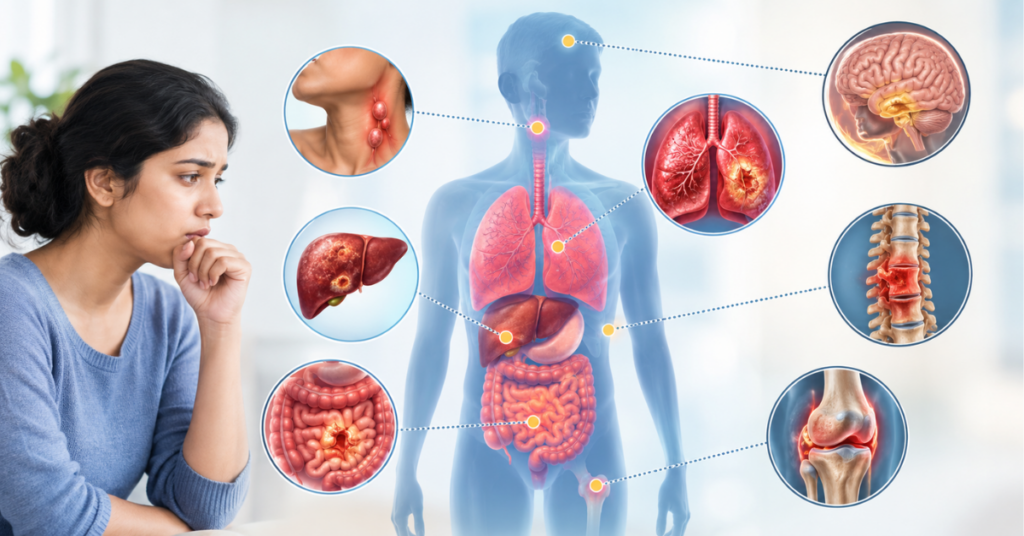
Tuberculosis (TB) is an infectious disease commonly associated with the lungs, but it can also affect other parts of the body. When TB develops outside the lungs, it is called extrapulmonary tuberculosis. Recognizing its possible symptoms is important because they can vary depending on the organ involved and may resemble other medical conditions.
What Is Extrapulmonary Tuberculosis?
TB is caused by bacteria called Mycobacterium tuberculosis. When the infection affects areas outside the lungs, such as the lymph nodes, bones, brain, or abdomen, it is known as extrapulmonary TB.
TB outside the lungs does not always cause a cough or other typical respiratory symptoms. Therefore, persistent or unexplained symptoms may require medical evaluation.
Which Parts Of The Body Can TB Affect?
1. Lymph Nodes
TB can cause swollen lymph nodes, often in the neck. The swelling may develop gradually and sometimes persists without significant pain.
2. Bones And Joints
Spinal TB may cause long-lasting back pain, stiffness, or difficulty moving. TB affecting other bones or joints can cause pain, swelling, and reduced movement.
3. Brain And Its Coverings
TB can affect the tissues surrounding the brain, causing a serious condition called TB meningitis. Symptoms may include persistent headache, fever, neck stiffness, confusion, or seizures. These warning signs require urgent medical assessment.
4. Kidneys And Abdomen
Kidney involvement may cause blood in the urine or urinary symptoms. Abdominal TB can lead to persistent abdominal pain, swelling, loss of appetite, fever, or unexplained weight loss.
Not everyone experiences the same symptoms, and these signs do not confirm TB on their own.
How Is TB Outside The Lungs Diagnosed?
Diagnosis depends on the affected body part and the person’s symptoms. A doctor may recommend a physical examination, blood tests, imaging such as ultrasound or CT scans, or examination of tissue and fluid samples.
Depending on the suspected site, laboratory tests may include molecular testing, microscopy, or culture to look for the bacteria. Sometimes, more than one investigation is needed to establish the diagnosis.
Because extrapulmonary TB can resemble other illnesses, self-diagnosis or starting anti-TB medicines without medical guidance is not recommended.
Why Is Proper Treatment And Follow-Up Important?
Treatment generally involves a combination of prescribed anti-TB medicines taken over a period determined by the disease site, severity, and clinical response. The treatment plan may differ from one patient to another.
Take medicines exactly as prescribed, attend follow-up appointments, and report side effects to your doctor. Do not stop treatment or change doses without medical advice, even if symptoms improve.
If you have persistent unexplained symptoms or concerns about possible TB, seeking Tuberculosis Management in Indore can help you receive an appropriate assessment, suitable investigations, and guidance on treatment and follow-up.
FAQs
1. Can tuberculosis affect organs other than the lungs?
Yes. TB can affect lymph nodes, bones, joints, the brain and its coverings, kidneys, and abdominal organs, among other sites.
2. What are the common symptoms of extrapulmonary TB?
Symptoms depend on the affected organ and may include swollen lymph nodes, persistent pain, fever, weight loss, or abdominal discomfort.
3. Is TB outside the lungs contagious?
It depends on the circumstances. Extrapulmonary TB is generally less likely to spread through the air, but TB affecting the lungs or throat may be contagious. A healthcare professional can assess the risk.
4. How is tuberculosis outside the lungs diagnosed?
Doctors may use clinical examination, imaging, and laboratory testing of tissue or fluid samples, depending on the suspected site of infection.
5. Can extrapulmonary tuberculosis be treated?
Yes. It is generally treated with prescribed anti-TB medicines. The combination and duration depend on the affected organ and the individual treatment plan.