
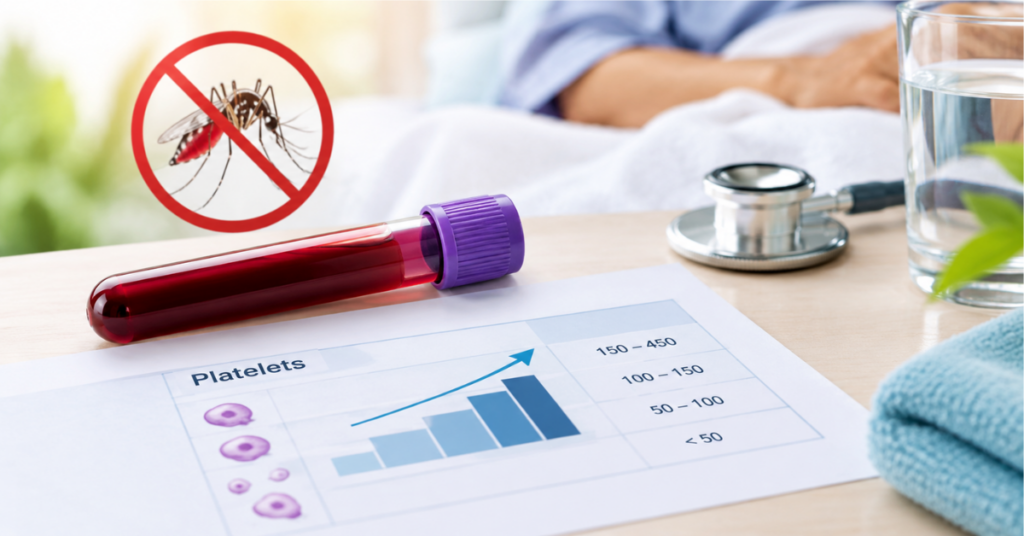
Dengue can reduce the number of platelets in the blood, so it is important to do blood tests regularly when you are sick. The results of platelet tests help doctors see how the blood is changing, but they need to look at the symptoms and results from other tests as well. Knowing these changes can help families recognize signs of recovery and when to seek medical help.
What Are platelets And Why Are They Important?
Platelets are small blood cells that help form clots and stop bleeding. In dengue, platelet counts may decrease because of changes in platelet production, increased destruction, and other effects of the infection. Your doctor may recommend repeating blood tests to monitor these changes.
Variation In Platelet Count During Dengue Recovery
During the course of the illness, platelet counts often fall and may start to rise during the recovery phase. However, the pattern is different for each individual.
The critical phase typically starts when the fever resolves, usually between days three and seven of the illness. Some patients may develop serious complications during this period, even if their temperature returns to normal. So, fever coming down does not always mean recovery.
Doctors look at platelet trends along with blood pressure, hydration, symptoms, and hematocrit – a measure of the proportion of red blood cells in the blood. A low platelet count alone does not determine the severity of dengue.
Safely Supporting Recovery
Follow your doctor’s advice during the illness. Important steps include:
- Rest: Allow your body to recuperate.
- Fluids: Drink enough fluids regularly, as your doctor advises, to prevent dehydration.
- Follow-up tests: Have your blood counts monitored as advised.
- Safe medications: Do not take aspirin or ibuprofen unless advised by a qualified doctor, as they can increase the risk of bleeding. Consult your doctor before taking any medicine for fever or pain.
Avoid relying on foods or home remedies to quickly raise your platelet count. A low count alone does not automatically warrant a platelet transfusion. The decision to treat is made by your doctor based on clinical findings and specific medical indications.
Symptoms Needing Immediate Medical Attention
If you experience severe abdominal pain, persistent vomiting, bleeding, difficulty breathing, unusual drowsiness, or cold and clammy skin, seek immediate medical attention. Even after the fever goes down, these symptoms may indicate warning signs of severe dengue complications.
Dengue, malaria, and typhoid may have similar symptoms, but they require different tests and treatment. If you develop a persistent fever or symptoms suggestive of any of these infections, seek professional evaluation. For proper Dengue, Malaria & Typhoid Treatment in Indore, it is important to consult a qualified medical professional. They can assess your symptoms, order the appropriate tests, and provide guidance on your treatment.
FAQs
1. Why does platelet count decrease in dengue?
Dengue can interfere with the production of platelets and can increase their destruction, so the count falls for a short time.
2. How long does it take for platelet counts to recover?
Recovery depends on the patient. As the illness gets better, the counts often begin to increase but it is important to have regular medical monitoring.
3. What does the increase in platelets signify? Is the dengue fully cured?
Not always. Before deciding about recovery doctors also look at symptoms, hydration, blood pressure and other blood test results.
4. What foods and fluids should I eat while I am recovering from dengue?
Choose balanced meals, fruits, vegetables, protein-rich foods and suitable fluids. Follow medical advice especially if you have other health conditions.
5. When does a patient need urgent medical attention?
If you have severe abdominal pain, repeated vomiting, bleeding, trouble breathing, unusual drowsiness, or cold and clammy skin, seek emergency care.