
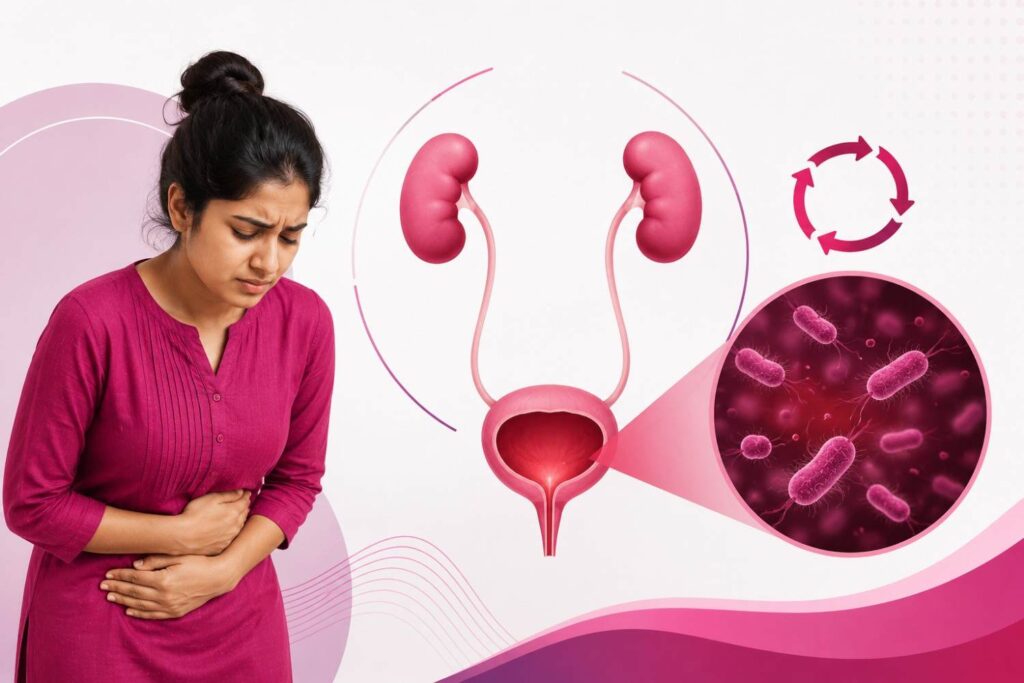
Urinary tract infections (UTIs) can be uncomfortable, especially when they keep coming back. If you experience burning while urinating, frequent urination, pelvic discomfort, or repeated episodes of infection, it may be time to consult a Recurrent UTI Specialist in Indore. Recurrent UTIs should not simply be treated with antibiotics again and again. Finding the reason behind repeated infections can help reduce future episodes and support better urinary health.
What Is a Recurrent UTI?
A urinary tract infection occurs when bacteria enter and multiply in the urinary tract. Most UTIs affect the bladder and urethra. Common symptoms include burning while passing urine, frequent urination, a strong urge to urinate, pelvic discomfort, and sometimes blood in the urine.
UTIs are generally considered recurrent when a person has two or more infections within six months or three or more within a year. Repeated infections are more common in women, although men can also develop recurrent urinary infections.
If infections continue to return, it is important to understand why. This is where consultation with a Recurrent UTI Specialist in Indore can be helpful.
When Should You See a Recurrent UTI Specialist in Indore?
You should consider specialist evaluation if your UTI symptoms keep returning after treatment. Some situations that require attention include:
1. You Keep Getting UTIs
If you have experienced multiple UTIs within a short period, do not rely only on repeated self-treatment. Frequent infections may require a proper evaluation to identify possible risk factors and determine an appropriate treatment and prevention plan.
A Recurrent UTI Specialist in Indore can review your previous infections, symptoms, test results, and treatment history.
2. Symptoms Return After Antibiotics
Sometimes symptoms may return soon after completing treatment. This does not always mean that you simply need another course of the same antibiotic.
The infection may involve bacteria that are not sensitive to the medicine used. Another possibility is that the symptoms may have a different cause. Current UTI guidance emphasizes appropriate diagnosis and avoiding unnecessary repeated antibiotic exposure.
For this reason, recurrent symptoms deserve medical assessment rather than repeated self-medication.
3. You Have Burning and Frequent Urination Again and Again
Burning during urination and frequent urination are common UTI symptoms. However, these symptoms can also occur with other urinary conditions.
If these problems repeatedly affect your daily routine, sleep, work, or personal life, consult a Recurrent UTI Specialist in Indore for an appropriate evaluation.
Frequent urination can have several possible causes, including urinary infection, bladder conditions, diabetes, pregnancy, certain medicines, and other urinary problems.
4. You Notice Blood in Your Urine
Blood in the urine should not be ignored. Although it can occur during a urinary infection, there can be other causes as well.
If you notice pink, red, or dark urine, especially along with pain or urinary symptoms, seek medical advice. A doctor can determine whether further testing is needed.
5. You Develop Fever, Chills, or Back Pain
Some urinary infections can involve the kidneys. Symptoms such as fever, chills, nausea, vomiting, or pain in the back or side may indicate a more serious infection.
These symptoms require prompt medical attention. Mayo Clinic advises urgent medical care when symptoms suggest a kidney infection, particularly when back or side pain occurs with fever and chills.
What Can Cause Recurrent UTIs?
There is no single cause of recurrent urinary infections. Several factors may increase the likelihood of repeated episodes.
These can include:
- Previous urinary infections
- Changes in urinary tract function
- Difficulty completely emptying the bladder
- Urinary stones or other urinary problems
- Certain medical conditions
- Pregnancy
- Menopause-related changes
- Sexual activity
- Use of certain urinary devices
- Bacteria that are resistant to commonly used antibiotics
The right approach depends on the individual. Therefore, identifying the possible reason for recurrence is an important part of long-term management.
How Is Recurrent UTI Evaluated?
When you visit a Recurrent UTI Specialist in Indore, the evaluation may begin with a detailed discussion about your symptoms and previous infections.
Your doctor may ask about:
- How often your UTIs occur
- Previous urine test results
- Antibiotics you have taken
- Whether symptoms return after treatment
- Other urinary symptoms
- Existing medical conditions
- Previous urinary procedures or problems
Depending on your symptoms and medical history, the doctor may recommend appropriate urine testing or other investigations.
The 2025 AUA/CUA/SUFU guideline focuses on accurate evaluation and management of recurrent UTIs while reducing inappropriate antibiotic use and antibiotic resistance.
Why You Should Avoid Self-Medicating for Repeated UTIs
It may be tempting to take the same antibiotic whenever familiar symptoms appear. However, repeated self-medication can create problems.
Not every episode of burning or frequent urination is necessarily caused by the same infection. Also, unnecessary antibiotic use can contribute to antimicrobial resistance and medication-related side effects.
Instead of repeatedly treating symptoms on your own, consult a Recurrent UTI Specialist in Indore when infections become frequent.
How Can Recurrent UTIs Be Prevented?
Prevention depends on the underlying cause and individual risk factors. Your doctor may discuss practical measures based on your health history.
General urinary-health habits may include:
- Drinking adequate fluids unless your doctor has advised fluid restriction.
- Avoiding unnecessary antibiotics.
- Not delaying urination for long periods.
- Maintaining good personal hygiene.
- Following your doctor’s treatment instructions carefully.
- Completing prescribed medication as directed.
- Getting medical advice when symptoms return.
It is also important to remember that prevention strategies should be personalized. What works for one person may not be appropriate for another.
Why Early Consultation Matters
Repeated UTIs can affect more than your physical comfort. Burning, urgency, frequent bathroom visits, and pelvic discomfort can interfere with sleep, work, travel, and everyday activities.
More importantly, repeated symptoms should be properly evaluated rather than continuously treated without understanding the cause.
A Recurrent UTI Specialist in Indore can help assess the pattern of infections, review previous treatment, identify possible risk factors, and develop an appropriate management plan.
Conclusion
If urinary infections keep coming back, it is worth looking beyond temporary symptom relief. Recurrent UTIs may require careful evaluation, appropriate testing, and a personalized treatment and prevention strategy.
If you experience repeated infections, symptoms returning after antibiotics, blood in the urine, or symptoms such as fever and back pain, seek professional medical advice. Consulting a Recurrent UTI Specialist in Indore can help you understand the possible cause and choose the right next step for your urinary health.
Frequently Asked Questions
1. How many UTIs are considered recurrent?
Generally, recurrent UTI refers to two or more infections within six months or three or more infections within one year.
2. Can UTI symptoms return after antibiotics?
Yes. Symptoms can return after treatment. The reason may vary, so repeated symptoms should be evaluated by a healthcare professional rather than treated repeatedly without assessment.
3. Is frequent urination always a sign of UTI?
No. Frequent urination can have several causes, including urinary infections, bladder conditions, diabetes, pregnancy, medications, and other health conditions.
4. When is a UTI considered an emergency?
Fever, chills, nausea, vomiting, and pain in the back or side can be signs of a kidney infection and require prompt medical attention.
5. Should I take antibiotics whenever UTI symptoms return?
You should not routinely self-medicate with antibiotics. Recurrent symptoms may need proper evaluation and, when appropriate, testing to guide treatment and reduce unnecessary antibiotic exposure.
For More Information, Visit Now: https://share.google/pVPzphm40R2ox810o