
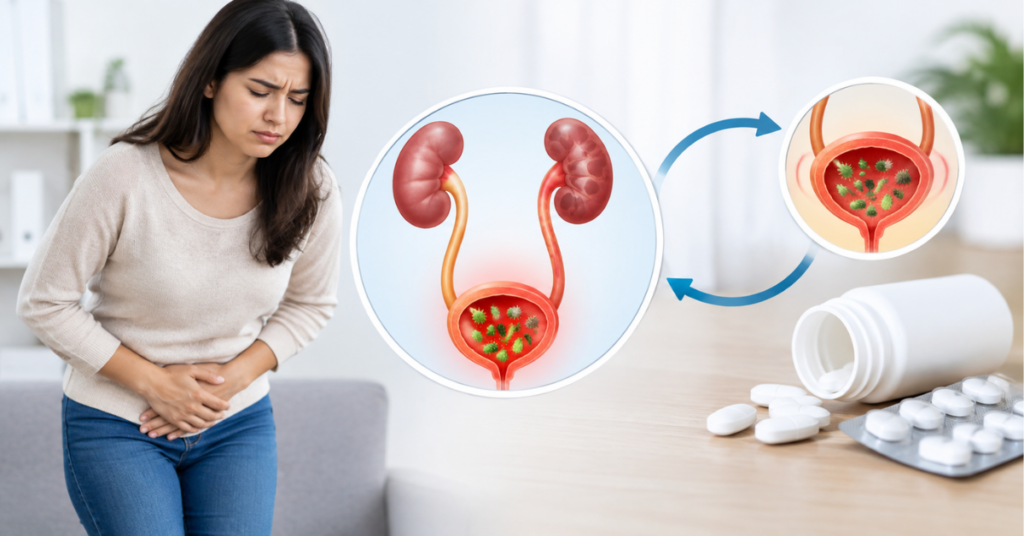
Signs of a urinary tract infection (UTI) include burning with urination, frequent urination, pelvic discomfort, or an urgent need to use the bathroom. Bacterial UTIs are usually treated successfully with antibiotics, but sometimes symptoms recur after treatment. There are a variety of reasons this can happen and a recurrent UTI does not necessarily mean the first treatment failed.
Can A UTI Return After Antibiotics?
Yes, a UTI can come back after finishing antibiotics. There are 2 common possibilities: persistent infection (relapse) and reinfection. If the original bacteria aren’t fully cleared, and the infection comes back soon after treatment, it’s called a relapse. Reinfection means that you develop a new UTI after the old infection has cleared up.
Knowing which situation is happening can help a healthcare professional know if more testing or a different treatment approach is needed.
Why UTIs Come Back After Treatment
The Infection Is Not Completely Gone
Sometimes bacteria can stay in the urinary tract after treatment. This can happen if the infection is more complicated than initially thought or the antibiotic prescribed does not fully clear the bacteria. Also, you might be less likely to be cured if you stop taking your antibiotics too soon.
Resistance To Antibiotics
Some bacteria can develop or naturally have resistance to antibiotics, which means that a particular medicine may not work against them. If symptoms persist or recur, a urine culture can identify the bacteria present and the antibiotics most likely to be effective.
Re-Infection
Another infection can occur after the initial UTI has been successfully treated. Some people are more likely to have recurrent UTIs because of things like sex, changes that come with menopause, or certain ways they interact with their urinary systems.
Problems With The Urinary Tract
Anything that interferes with the normal flow of urine may increase the risk of infection coming back. Recurrent UTIs can sometimes be caused by kidney stones, an enlarged prostate, urinary retention, or structural urinary tract problems and may require medical assessment.
What Makes People More Likely To Get UTIs Again?
Some factors such as past UTIs, sexual activity, pregnancy, menopause, urinary tract abnormalities, or incomplete bladder emptying can make recurrent UTIs more likely. People who have frequent infections may want to talk to their healthcare provider about their individual risk factors, rather than taking antibiotics over and over again without evaluation.
When To See A Doctor?
If the symptoms of a UTI do not improve soon after treatment, or happen repeatedly, then you should seek medical advice. A healthcare provider may order a urine test or urine culture to confirm the presence of bacteria and to help determine treatment.
The prompt assessment of symptoms such as fever, chills, back or flank pain, vomiting, blood in the urine, or feeling very unwell are especially important because these symptoms may also be associated with a more serious infection involving the kidneys.
What Are Ways To Prevent Recurrent UTIs?
The prevention depends on the cause and your individual risk factors. You may be able to help by staying hydrated, not holding your urine for long periods, and following medical advice. If UTIs are recurrent, a doctor can evaluate possible causes and discuss appropriate preventive options. If you are looking for urinary tract infection treatment in Indore, professional assessment can help to identify the cause of recurring symptoms and guide appropriate care.
FAQs
1. Does UTI return right after antibiotics?
Yup. If the initial infection was not completely cleared or a new infection develops symptoms may return. Medical evaluation can help to differentiate between these possibilities.
2. Why do I still have UTI symptoms after completing antibiotics?
If the bacteria are resistant, the infection has not cleared or the symptoms have another cause, symptoms can persist. You may be asked to provide a urine sample or culture.
3. How many UTIs are classified as recurrent?
Recurrent UTI is usually defined as 2 or more infections in six months or 3 or more infections in a year.
4. What if my UTI recurs, do I take the old antibiotics?
No, the antibiotics left over may not be right for the present infection and may cause resistance to antibiotics. Please consult with a healthcare professional for adequate assessment.
5. Can a recurrent UTI turn into a kidney infection?
Yes. Sometimes a bladder infection can spread to the kidneys. If you develop fever, chills, flank or back pain, nausea, or vomiting, get medical attention right away.