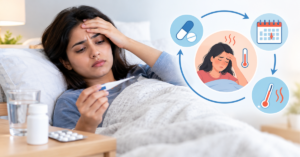
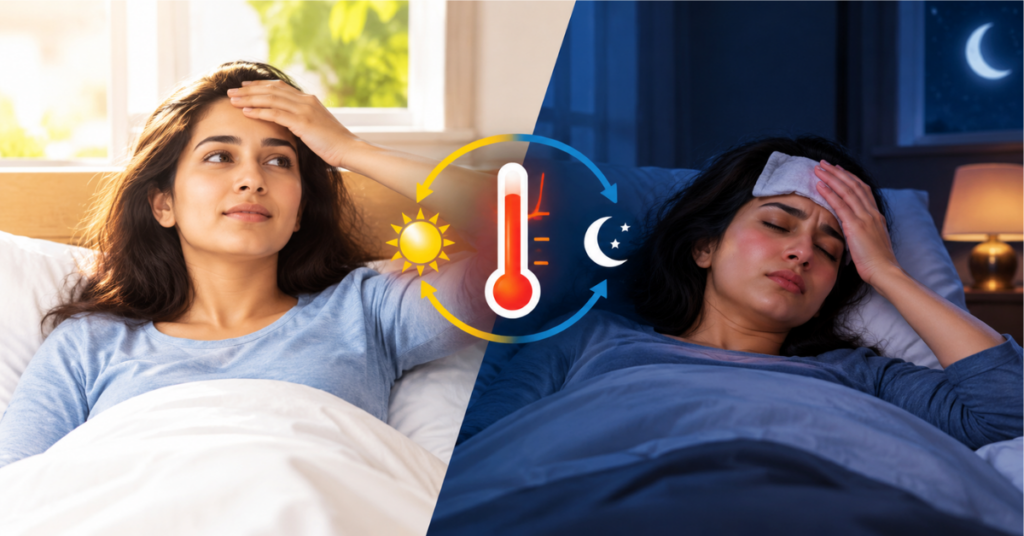
Do you notice your fever is mild during the day and worse at night? It is often part of the experience of being sick. As the night progresses, you might feel hot, get cold chills, or develop headaches and body aches. Knowing what causes this can help you track your symptoms and know when to get medical care.
Why Does Fever Go Up At Night?
1. The Natural Temperature Cycle Of Your Body
Throughout the day, your body temperature changes naturally. It is usually lowest in the early morning and increases in the late afternoon and evening. Your body’s internal clock, also called the circadian rhythm, controls this daily pattern.
That natural rise can make you feel like a fever you already have is more noticeable at night when you have an infection.
2. How Your Immune System Reacts
Your immune system releases chemicals to control your body temperature when your body is fighting an infection. These responses can cause fever, chills, and fatigue. Changes in immune activity throughout the day might influence how you experience these symptoms too.
3. Symptoms Are More Noticeable At Night
At night, there is less to distract you. You may notice an increase in body aches, headaches, sweating, and chills. Warm blankets, a hot room, and lack of sleep can also make you feel worse.
Why Does The Fever Get Better In The Daytime?
Your body temperature is naturally lower in the morning. This can make the fever seem to get better during the day. You may also find yourself more active, drinking more fluids, and distracted by day-to-day activities.
Just because you feel better does not mean the infection is gone. With some infections, the fever may come and go over several days.
When To Worry About Night Fever?
Sometimes a slight fever may not be a problem. If your fever continues, comes back, or is accompanied by worsening symptoms, seek medical advice.
Look for these warning signs:
- Trouble breathing or chest pain
- Confusion, drowsiness, or fainting
- Severe dehydration or very little urine production
- Sustained high fever
- Severe headache or stiff neck
- Symptoms getting worse rapidly
Babies less than three months of age with a temperature of 38°C (100.4°F) or higher require urgent medical assessment.
Dealing With Night Fever
- Take your temperature with a digital thermometer.
- Drink plenty of water and other suitable liquids.
- Dress lightly and avoid using too many blankets.
- Sleep comfortably in a cool room.
- Take fever medicines only as directed by a healthcare professional.
If fever comes back during the night, or if you are unsure of the cause, ask a doctor for advice. In case of fever, an infectious disease specialist can help identify possible causes and guide you toward appropriate medical evaluation and Fever Treatment in Indore based on your symptoms.
FAQs
1. Why does fever go up at night?
In the evening your body temperature naturally goes up. Infection-related immune responses can amplify the increase.
2. Is it normal for fever to drop during the day?
Yes. In the morning the body is usually cooler. But a lower temperature doesn’t mean the infection is gone.
3. Can an infection cause a fever that worsens at night?
Yeah. Viral and bacterial infections can cause fluctuating fever, and it can be worse in the evening or at night.
4. When should fever at night be a cause for worry?
If you have: high fever (persistent), difficulty breathing, confusion, severe dehydration, worsening of symptoms, seek medical help immediately.
5. What should be done to treat recurrent fever every night?
Watch your temperature and other symptoms, drink plenty of fluids and see a doctor to find out what’s causing them.