
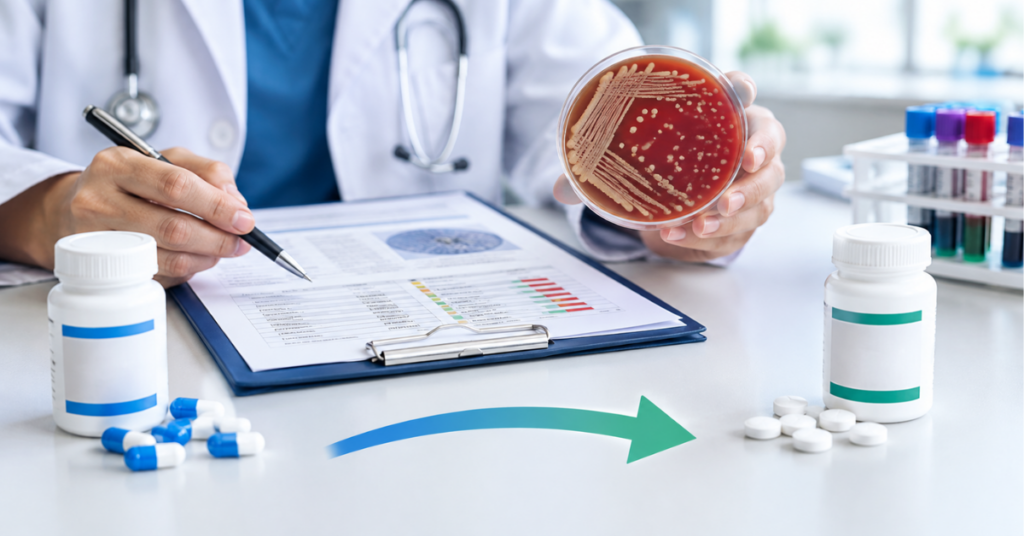
The doctor may start giving an antibiotic before he knows just what micro-organism is causing the infection. This is common when treatment needs to start quickly. When the culture report is back, the antibiotic may be changed based on the specific microorganism and the medications likely to work against it.
What Is A Culture Report?
A culture test is a lab test that checks a sample (like urine, blood, sputum or wound fluid) for microorganisms that could be causing an infection. The laboratory cultures and identifies the microorganism. This can be a lengthy process, as it may take hours or even days for the organism to grow enough to be accurately tested.
The report may also contain antimicrobial susceptibility testing, often called antibiotic sensitivity testing. This tells us what antibiotics might work against the microorganism we found and what might not work.
Why Can The Antibiotic Be Changed?
Doctors may start with an antibiotic that commonly covers the bacteria suspected from the patient’s symptoms and clinical condition. It is called empirical treatment – you start treatment before knowing exactly what is causing the problem.
The doctor may have more specific information after the culture report. If the bacteria found are resistant to the first antibiotic, another medicine can be selected. In other cases, the first antibiotic may still work, but a more appropriate or narrower antibiotic may be preferred.
Switching antibiotics after a report does not always mean the first one was the wrong choice. Maybe the decision taken was correct then, with the information available at that time.
Antibiotic Sensitivity Is?
Antibiotic sensitivity is when a microorganism is likely able to be killed by a certain antibiotic. Resistance means the microorganism may not respond well to the medicine.
For example, if a culture shows bacteria resistant to the antibiotic used, the doctor may select another antibiotic to improve the chance of controlling the infection. The choice also depends on the site of infection, severity, allergies, kidney function, other medicines and the overall condition of the patient.
The Importance Of Targeted Antibiotic Therapy
Once the causative microbe has been identified, treatment often can be more directed. A more targeted antibiotic based on culture and sensitivity results may help to avoid unnecessary exposure to broader antibiotics.
If resistant bacteria are suspected, targeted therapy is especially important as the treatment options may be more limited. When clinically appropriate, doctors may review the patient’s response and repeat tests.
Drug Resistance: When Should You Worry?
Suspect drug resistance if the infection does not improve as expected, if an antibiotic has been used in the past, or if resistant bacteria are found by laboratory testing. Laboratory evidence can help doctors make treatment decisions, guiding care by culture. Specialist evaluation and culture-based antibiotic selection can help support appropriate infection management for patients requiring Drug-Resistant Infection Treatment in Indore.
FAQs
Why do we require a culture test when we have already started antibiotics?
A culture can isolate the microbe and tell you what antibiotics might work.
How long will it take to get culture report?
The time depends on the sample and the microorganism. Some results are available within a day, others take longer.
Are there bacteria that are resistant to antibiotics?
Yes. Some antibiotics are less effective against bacteria that develop or acquire resistance.
Do I stop an antibiotic when I get the culture report?
Never stop or change an antibiotic on your own. Discuss the report with your doctor.
Does changing my antibiotic mean the infection is getting worse?
Not necessarily. Or the change may be due to new information from the culture and sensitivity results.