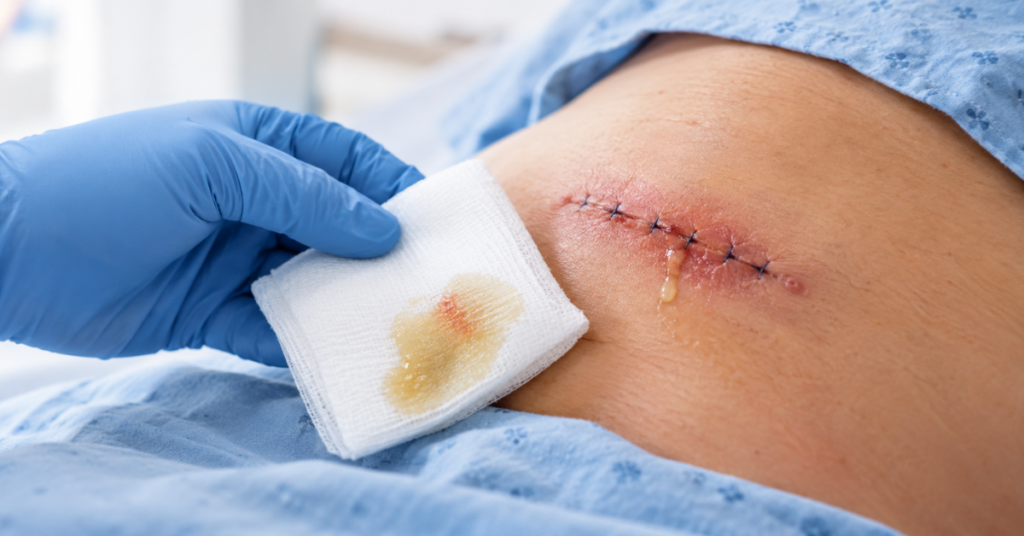
Sometimes a little fluid from a surgical wound is normal healing. However, if the drainage increases, changes in color, develops an odor or lasts longer than expected, medical evaluation may be necessary. The nature of the drainage and other symptoms can help to determine when to seek medical advice.
What Is Wound Drainage?
The body will send fluid to the healing area after surgery. Early healing may involve small amounts of clear or slightly yellow watery fluid. The quantity should as a rule decrease with healing of the wound.
Thick, cloudy, green or yellow drainage is a cause for concern, especially if pain, redness, warmth, swelling or fever increase. You also have to worry about smelly fluid.
Common Drainage Problems
Fluid from an incision can be caused by several conditions:
Normal healing: May include small amounts of clear or blood-tinged fluid in the early stages of healing.
Seroma: After surgery, a pocket of clear fluid can develop under the skin.
Hematoma: Dark or blood-stained drainage may represent a collection of blood.
Surgical site infection: Bacteria may infect the incision and cause pus-like drainage, increased redness, warmth, pain, or fever.
When To See A Doctor
If drainage continues or increases, or if it is thick, cloudy or foul-smelling, or if the wound becomes more painful or swollen, seek medical advice. Other reasons to contact your surgeon or seek prompt medical care include: Fever, spreading redness, warmth around the incision, feeling unwell, or wound opening. Heavy bleeding, rapidly increasing swelling, severe pain or significant wound opening may need urgent assessment.
How Do You Assess A Draining Wound?
The doctor may examine the incision for signs of redness, swelling, tenderness, wound separation, or a fluid collection and ask about the procedure and symptoms. Depending on what is found, you may need a drainage test, blood tests, imaging, or other evaluation. Treatment depends on the cause and may include wound care, drainage of a fluid collection, or medicines if an infection is confirmed or strongly suspected.
If drainage is not settling, or if there are warning signs, timely medical assessment is important. In Indore, Post-Surgical Infections Treatment in Indore are treated first by identifying the problem, followed by selecting the appropriate wound care, drainage, antibiotics or other treatment based on the diagnosis.
FAQs
1. Is it normal for a surgical wound to drain clear?
A small amount of clear or slightly yellow fluid may be present in the early healing phase. If the drainage increases or does not go away, see a doctor.
2. Does yellow drainage always mean infection?
No, color alone can not diagnose infection. Thick, cloudy, foul-smelling drainage that is accompanied by increasing pain, redness, swelling, or fever is more concerning.
3. How long does a surgical wound take?
Time depends on the procedure and the individual’s healing. (Drainage should tend to decrease, not increase.) Continue drainage, you should seek medical care.
4. Should I apply pressure to a bleeding wound?
No. Do not squeeze or manipulate the incision unless told to do so by your health care provider.
5. When is wound drainage a medical emergency?
If you have heavy bleeding, severe pain, significant wound opening or you are feeling very unwell seek urgent medical advice.